
Renewable Feedstocks
Feedstocks
Local Supply
Renewable and Sustainable
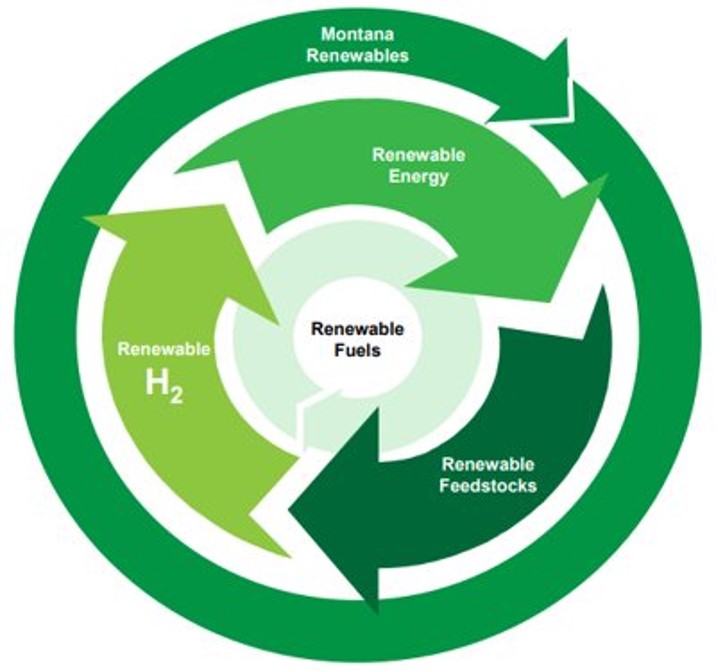
Renewable feedstocks are naturally occurring and sourced from a wide variety of oil seed crops, byproducts from ethanol production, and waste byproducts from the food supply chain. With our feedstock pretreatment technology, Montana Renewables can run any renewable feedstock from anywhere in the world.
Used Cooking Oil
Tallow
Tallow is a type of animal fat that can be used as a feedstock for renewable fuels. A byproduct of the meat production industry, tallow is obtained from rendering the fatty tissues of cattle, pigs, and other livestock. It can be transported via railcar or truck to facilities for conversion into renewable diesel, sustainable aviation fuel, renewable naphtha and/or other products.
Distillers Corn Oil
Camelina Oil
Canola Oil & Soybean Oil
Strategically Located
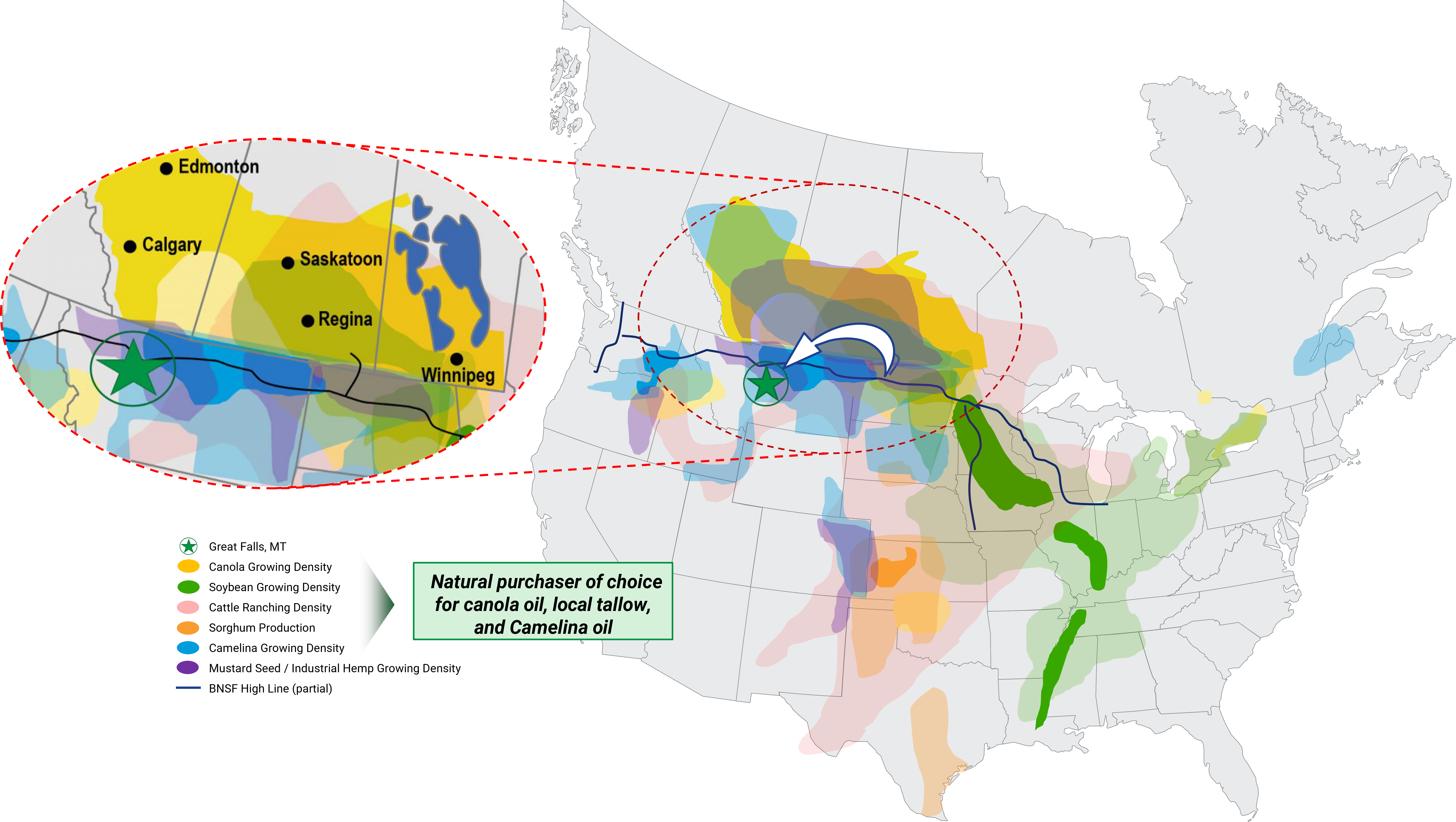
Montana Renewables’ production facility in Great Falls, Montana is strategically located close to major feedstock sources in both the United States and Canada, including the temperate oil seed growing zone along with large farm and ranch operations in Montana and the adjacent states and provinces. This strategic location significantly decreases the carbon emissions as well as transportation costs of both the renewable feedstock to MRL and the renewable fuel to product off-takers.
The demand for renewable fuel is the highest in states and/or provinces that have enacted a Low Carbon Fuel Standard (LCFS) that is generally concentrated in the northwest United States and Canada. An additional emissions benefit is that the site’s electrical power is physically sourced from the five hydroelectric dams immediately downstream of Montana Renewables’ location on the upper Missouri River.
Renewable Feedstocks
Local Supply, Long & Sustainable

Montana Renewables, LLC is a subsidiary of Calumet, Inc. Visit Calumet.com for more information.